

Every host knows the moment of doubt. You open the Airbnb app, look at the payouts and work out how much commission you handed over last year. The number is startling enough to buy a small family car with. Platforms like Airbnb, Booking.com and VRBO are excellent at bringing you your first guests, but in the long run it feels like building on rented ground. One change to the search algorithm, one unfair complaint, one unexpected policy shift, and your occupancy falls off a cliff. Reducing your dependence on Airbnb is not a luxury, then. It is a necessary move for anyone building a rental business meant to last. This article walks through five concrete steps for taking back control of your bookings, your margin and your relationship with your guests.
What does reducing your Airbnb dependence actually mean?
It does not mean closing your account tomorrow or shutting the door on guests who come through the big travel sites. It means deliberately rebalancing your channel mix. Instead of 80 to 100 percent of your revenue arriving through external platforms, you work towards a healthy hybrid where most reservations come in through channels you own.
In practice that means using Airbnb not as your only sales channel but as a shop window. The industry calls it the billboard effect: guests discover your holiday home, B&B or boat on the big platform, then book directly on your own site because the terms are better, the price is sharper or the service is worth it.
Why does it matter?
Building on a single external platform carries real business risk. Once you see which factors threaten your margin and your continuity, it becomes obvious why this belongs at the top of the list.
Commission that eats your margin
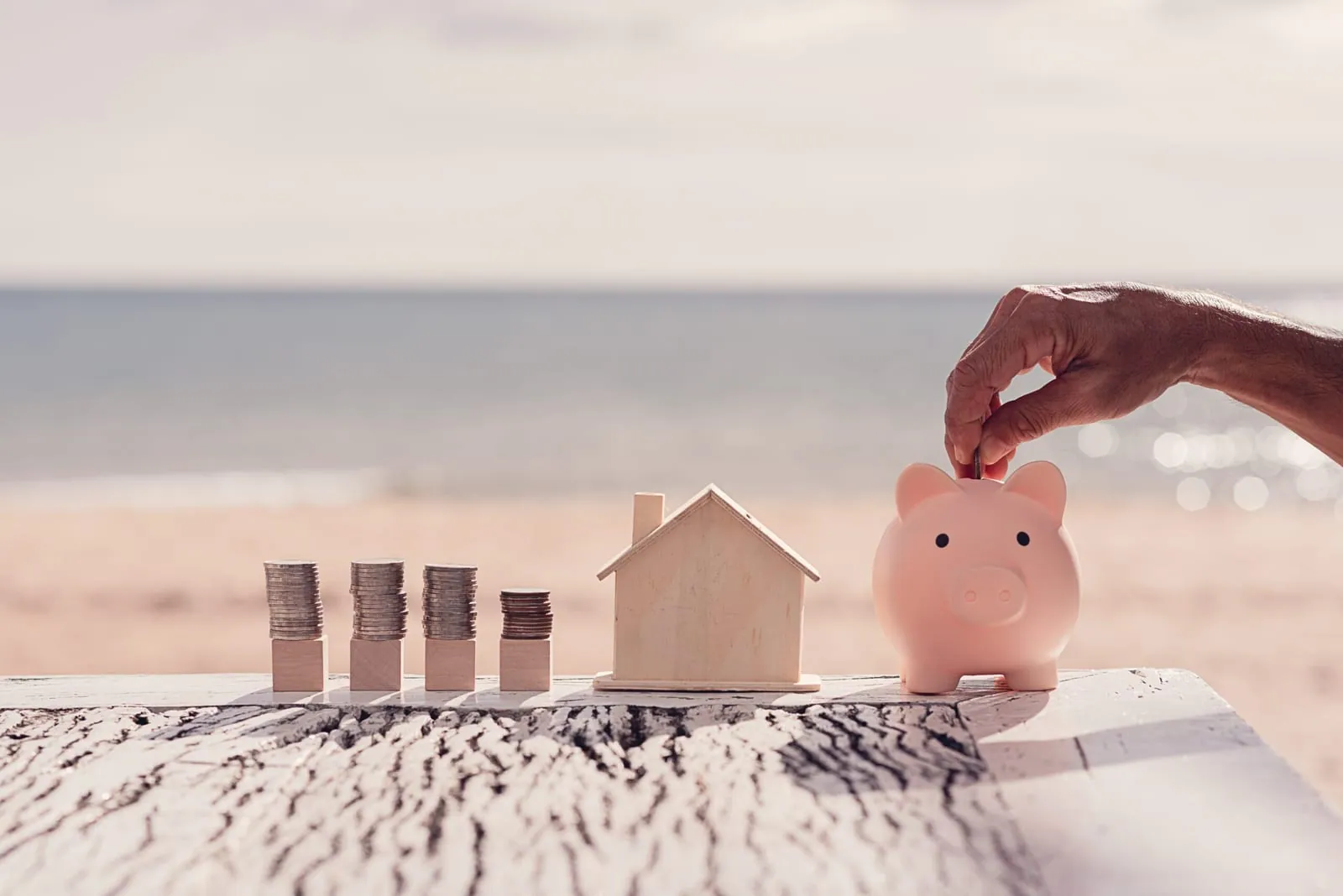
Platforms charge substantial commission on the booking total. Depending on the fee structure you pay, directly or indirectly, somewhere between 15% and 20% in service charges. On annual revenue of 40,000 euros that is 6,000 to 8,000 euros handed to a middleman. Money you could have put into the property, or simply kept.
You do not own your guest list
Airbnb shields guest email addresses and phone numbers carefully. You cannot build a relationship after their stay, send them anything, or invite them back directly. Every year you are effectively buying the same guests again through the platform.
Algorithm and platform risk
A platform can change the rules without warning: stricter cancellation terms imposed on you, discount campaigns you are expected to join, or an account suspended by automated complaint handling. If your entire income depends on one account, that is a fragile place to stand.
No brand of your own
When someone tells friends where they spent the weekend, they almost always say they stayed in a nice little Airbnb. They remember the platform, not the name of your property. A direct booking strategy is how you build a name people actually repeat.
How it works in practice: five steps to more direct bookings
Turning your booking flow around takes a plan. These five steps lay the foundation.
Step 1: a professional website with a booking module built in
You cannot welcome guests through your own channel until the front door is properly open. A static page with a contact form no longer does it. Guests are used to booking instantly on the big platforms.
Your rental website needs three things:
 Speed and clear photography. High resolution images that load fast, showing the feel of the place, the layout and what makes it different.
- A properly mobile site. Around 65% of accommodation searches happen on a phone. If your calendar does not work on a smartphone, the visitor is gone in three seconds.
- A booking module built to convert. Use a real reservation system where guests see live availability, pay on the spot and get an automatic confirmation. Have a look at an example of our booking module.
Step 2: payment methods people already trust
Nothing costs you more conversions than a guest who wants to book on your own site and gives up at checkout because the payment method they use is missing. The platforms offer a universal payment screen; your site has to feel just as finished.
Make sure your booking engine supports at least:
- iDEAL, the default for the Dutch market.
- Bancontact, essential if you want Belgian guests.
- Credit cards (Visa and Mastercard), which German, French and other international visitors expect. We wrote more about this in which payment methods you cannot afford to miss.
Step 3: give direct bookers something extra
Why would a guest book through your website when they can also see you on Airbnb? You have to give them a reason to skip the middleman. Since you pay no commission on a direct booking, you have the room to offer real value.
- A best price guarantee. Offer 5% to 10% below the Airbnb price. The guest saves money and you still keep more.
- More flexible terms. Better cancellation conditions, or a free early check-in or late check-out when the calendar allows it.
- Extra service. A welcome package with local products, a bottle of wine on arrival, bikes at no charge. Put these direct-booking extras right above the booking button.
Step 4: use the billboard effect
You do not have to turn your back on Airbnb. Use it as cheap, effective marketing that brings you new guests. The moment someone is standing on your doorstep, your own strategy starts: turning an Airbnb guest into a returning direct one.
- Print in the property. A well made information book or welcome card on the table, with your own website and name on it.
- Keyrings and discount cards. Hand something over at checkout carrying a personal discount code, say 10% off the next booking made on your own site.
- A Wi-Fi landing page. Let guests join the network through a page where they leave an email address in exchange for the digital guide with local tips.
Step 5: build your own guest list and actually use it
The most valuable thing an independent host owns is a mailing list of happy former guests. A returning guest costs you nothing in advertising or commission.
Collect email addresses during or after the stay, in a way that respects data protection law. Then send something worth reading two to four times a year, with a direct booking link:
- Autumn colour in the region: book your weekend away now, with 10% off for returning guests.
- For previous guests only: next summer’s calendar is open.
What you gain
Work through those steps and you change the foundations of the business. The differences show up quickly:
- Your full margin. Revenue lands in your account without 15% to 20% disappearing on the way.
- Control. You set the house rules, the cancellation terms, the deposit arrangements and the tone you use with guests. See our article on writing cancellation terms for your website.
- A brand of your own. Guests remember your property by name and recommend it directly.
- Resilience. If a platform changes its rules, reshuffles its search results or goes down, your own bookings carry on.
What it costs you
In fairness, a direct booking strategy asks something in return. It is not a case of launching a website and waiting.
- Time spent on marketing. Airbnb comes with an audience of millions built in. Visibility is now your job, which means some working knowledge of search, Google Business Profile and possibly social media.
- Responsibility for payments and security. A secure connection, a reliable payment provider and clear terms are yours to arrange.
- Software costs. You need a proper website and reservation software. Set against thousands of euros in commission, the monthly fee is close to a rounding error.
Three things you can do today
- Get on Google Vacation Rentals. Make sure your property shows up in Google Maps and Google Travel with a direct link to your own booking page. It is one of the fastest growing sources of commission-free bookings.
- Claim your name everywhere. Your Facebook page, Instagram profile and Google Business Profile should all carry exactly the name of your property.
- Rewrite your platform listings. You cannot put links in Airbnb messages, but you can state the name of your property clearly in the description. Guests who are paying attention will type it into Google to see whether you have a site of your own with a better price.
Where this is heading
The short-stay market is changing quickly. Travellers are increasingly aware of the service fees platforms add on top of the nightly rate, and more of them are willing to book with the owner directly because of it.
AI search and travel assistants are becoming a bigger factor too. People ask a generative tool to find them somewhere unusual to stay in the countryside, and those systems scan the web for direct websites with clear terms, current availability and clean structured data. If your own site is technically sound, the AI picks up your direct booking link and routes around the platforms entirely.
In closing
Reducing your dependence on Airbnb is not something you finish in a day, but it is the smartest investment you can make in the future of your rental business. Build the website, give direct bookers a real reason to use it, and grow a guest list of your own, and you go from a host at the mercy of a platform to an operator with a brand.
Use Airbnb for what it is good at: a shop window that brings you new guests. Then make sure the key to your front door, your customer relationships and your margin stays in your hands.
Frequently asked questions
In most cases, no. The goal is not to get rid of Airbnb but to depend on it less. Use it as a way in for guests who have never heard of your place. Once they have stayed with you, good service and a clear advantage for booking direct are what move their next reservation onto your own website.
Between 5% and 10% below the total price on Airbnb is usually the tipping point. Platforms often charge 15% or more in commission, so an 8% discount leaves the guest better off while you still keep more per booking than you would have.
Use reservation software with a channel manager or iCal synchronisation. When a booking comes in on your own website, those dates are blocked straight away on Airbnb, Booking.com and every other channel you have connected.
No. Modern reservation software is built for people who are not developers. A short embed code or a plug-in puts the booking module on your site in a few minutes, and the system handles the calendar, the payments and the confirmation emails from there.
Set up your Google Business Profile properly, get listed on Google Vacation Rentals, and optimise your site for local search terms. It also helps to give your property a distinctive name, so guests who spot you on Airbnb can find you on Google.
Not through Airbnb messaging: external links and promotion of your own site are blocked, and the platform enforces that strictly. Once a guest is physically staying with you, though, a welcome book, a flyer or a discount card at checkout is entirely up to you.
Any other questions? You can always email us at info@bookedin.nl.