


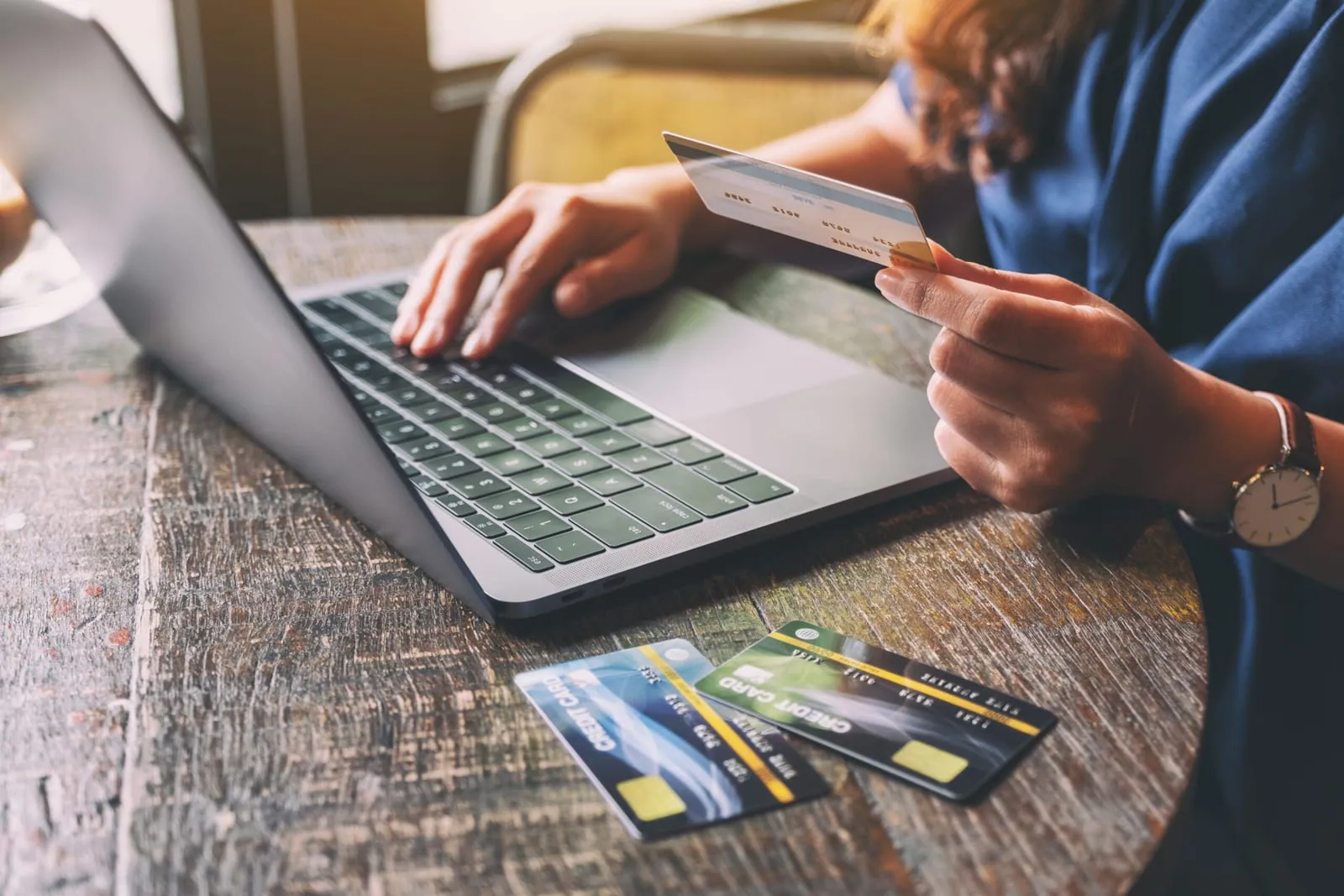
You have everything in order. The new photographs are on the website, the peak season rates are worked out to the euro, and the first enthusiastic visitors are clicking Book now. They pick their dates, fill in their details and arrive at the final step: payment. And that is exactly where it goes wrong. The German guest cannot find the option they know, the Belgian visitor looks in vain for Bancontact, and both of them leave. No reservation, no revenue.
Plenty of operators in the rental business pour everything into marketing and interiors and forget the till. This article answers the question that decides how many of those visitors become bookings: which payment methods can you genuinely not do without? We look at how your guests actually pay, weigh the costs against what they bring in, and make sure you stop losing direct bookings at the last screen.
What online payment methods are, in this business
Start with the basics. An online payment method is the system that lets a guest pay for a booking on your own website, directly and safely. You could once get away with a manual bank transfer and a hopeful note asking people to send the money within fourteen days. Modern booking runs on immediate certainty for both sides.
In accommodation and holiday rental there are three broad categories:
 Direct bank transactions. Systems that connect straight to the guest own banking environment, such as iDEAL in the Netherlands or Bancontact in Belgium.
- Credit and debit cards. Cards accepted worldwide, often carrying insurance or deferred payment: Mastercard, Visa, American Express.
- Wallets and mobile payment apps. Digital wallets tied to a phone, so paying takes a face scan or a fingerprint: Apple Pay, Google Pay.
Why the range matters
You might think that as a Dutch host, iDEAL alone gets you a long way. In this market that is an expensive assumption. Offering the right payment options is the beating heart of your conversion.
First there is the cultural side. Dutch guests are indeed devoted to iDEAL, but a Belgian visitor is uneasy on a website without Bancontact. And that valuable German guest? They leave without hesitation if there is no credit card, no Sofort (now usually folded into Klarna) and no PayPal. Ignore how your neighbours prefer to pay and you shut out millions of potential guests.
Second, a professional payment screen creates trust on the spot. Guests are often committing hundreds or thousands of euros. When they reach checkout and see the logos they recognise, their willingness to go through with it rises sharply, and the barrier to booking with you directly rather than through a big platform drops.
The big three, close up
To decide what you cannot leave out, it helps to see how each system works in practice and who it serves.
1. iDEAL: not optional in the Netherlands
With well over 70 percent of Dutch online commerce, iDEAL is simply mandatory for any website trading in the Netherlands. The advantage for you is that iDEAL payments are irreversible: once it is paid it is settled, and the guest cannot unilaterally reverse it through their bank. Transaction costs are low and fixed, usually between 25 and 35 cents per payment.
2. Bancontact: the key to the Belgian market
What iDEAL is to the Netherlands, Bancontact is to Belgium. In holiday rental in particular, whether that is cottages on the coast, places in the Ardennes or campsites, Flemish and Walloon guests are an enormous audience. Bancontact works much like iDEAL: the guest pays straight from their banking app or with a card reader. The transaction cost is slightly higher, either a little more per payment or a small percentage, but what Belgian bookings bring in more than covers it.
3. Credit cards: international guests, and deposits
Credit cards are the global standard for travel. Guests from Germany, the United Kingdom, France and outside Europe expect to pay with Visa or Mastercard. There is a second reason to accept them, though: pre-authorisation for the deposit. Instead of having hundreds of euros transferred and then sent back, you can place a temporary hold on the card. No damage after departure, and the hold simply lapses, with no administration at all.
What a complete set of payment options gives you
- Fewer abandoned bookings. You remove the biggest source of friction at the last stage of checkout.
- A higher average booking value. On a credit card in particular, guests book longer stays and better packages more readily, because the money does not leave their current account the same day.
- Full automation. Modern payment handling puts the payment straight into your calendar, sends the invoice and marks the reservation as confirmed. See also our article on why guests drop out while booking.
- A professional impression. Your website meets the standard set by the big booking sites, without paying them commission on your revenue.
The costs and the caveats
Is it all upside? Broadly, yes, but there is a financial and technical back end to think about.
The main one is transaction costs. Where an iDEAL payment costs a small fixed amount, credit card companies almost always take a percentage of the total, often between 1.5% and 2.5%. On a booking of 1,500 euros that is twenty or thirty euros to the payment provider. Set against the 15% to 20% commission an online travel agent charges, it is still a fraction of the price.
There is also chargeback risk on cards. Months after a stay, a guest can dispute with their card company that they made the booking or that the service was not as described, and the amount is reversed. Keep your terms, your cancellation rules and your correspondence with the guest documented properly.
Practical tips for your payment page
- Add Apple Pay and Google Pay for mobile bookers. More and more people book a holiday from the sofa on their phone, and nothing is more irritating than having to dig a card out of a coat pocket. These wallets wrap around iDEAL and cards and let guests pay in a single tap. Mobile conversion climbs sharply.
- Offer a clear deposit arrangement. Someone booking a summer holiday six months ahead faces a real barrier if you ask for 100% up front. Set your reservation software to take, say, 30% on booking through iDEAL or Bancontact, with the balance collected 30 days before arrival through an automatic payment link.
- Use one payment service provider for all of it. You do not need separate contracts with banks, card companies and Belgian institutions. Providers like Mollie or Stripe bundle the lot. Through a decent reservation system you tick the methods you want to show, and everything is settled safely into your business account through a single party.
Where paying online is going
One clear trend is buy now, pay later, through Klarna or Riverty. It is already normal for clothing and electronics, and demand is growing for paying for holidays and group accommodation in instalments. Among younger travellers and families in particular, it lowers the barrier to booking a longer stay.
The other is iDEAL 2.0, and the European Wero that follows it. Guests will be able to store their address and profile inside their banking environment, which will reduce both paying and filling in your booking form to a single click.
So what can you not do without?
Putting it all together, the answer is that you need all three.
- iDEAL is the foundation for the Dutch home market.
- Bancontact is the bridge to Belgian bookers, and fills out your occupancy.
- Credit cards open the door to the German and international market, and make handling deposits painless.
- Apple Pay and Google Pay sit on top of those and make the mobile experience seamless.
Offer that combination and you remove every remaining reason to abandon a booking. Fewer people leaving at checkout, more commission-free direct reservations, and a healthier cash flow.
Frequently asked questions
The exact rates differ per payment service provider, such as Mollie or Stripe. An iDEAL transaction usually costs a fixed amount of around 0.29 euros. Bancontact tends to sit around 0.35 euros or a small percentage, roughly 1.5%. For European credit cards you normally pay about 1.8% of the total plus a small fixed fee.
Yes, and it is strongly recommended. Even a small B&B tends to attract international visitors from Germany, the UK or France, and for them a credit card is the natural, familiar way to secure a booking online. Without it you will almost certainly lose that audience.
With iDEAL or Bancontact the payment is confirmed on your website immediately: the system blocks the calendar and sends the confirmation straight away. With a manual bank transfer you have to check your account yourself and the booking sits in limbo for days, which increases the risk of double bookings and no-shows.
Within the European Union, PSD2 forbids surcharging for most consumer payments, including iDEAL, Bancontact and standard Visa and Mastercard. You need to build these small costs into your rate as overhead instead.
It is called a pre-authorisation. At booking or check-in the deposit amount is reserved on the card but not actually charged. If the property is left in good order, the hold simply expires, with no money moving in either direction.
Make sure your reservation software works with mobile wallets such as Apple Pay and Google Pay. They sit on top of the guest bank or card details, so nobody has to type a card number or a long address on a small screen, which finishes noticeably more bookings.
Any other questions? You can always email us at info@bookedin.nl.